Basement Flooring in Philadelphia, PA
The floor is where a basement finish most often fails, because it sits on concrete that is never completely dry. Old slabs in city houses can also be thin, cracked or uneven. A contractor from Philadelphia Basement Finishing will check yours and recommend a floor to match. The published national range is $2,000–$12,000.
- Free visit and written estimate from a local contractor
- Damp, drains and radon checked before any building
- Permit paperwork handled by the contractor
Basement Flooring cost in Philadelphia, PA
Typical basement flooring prices in Philadelphia: $2,000–$12,000. The main things that change the price: area, material, leveling or repairing the slab, and any subfloor. Use the quote form for a price on your job.
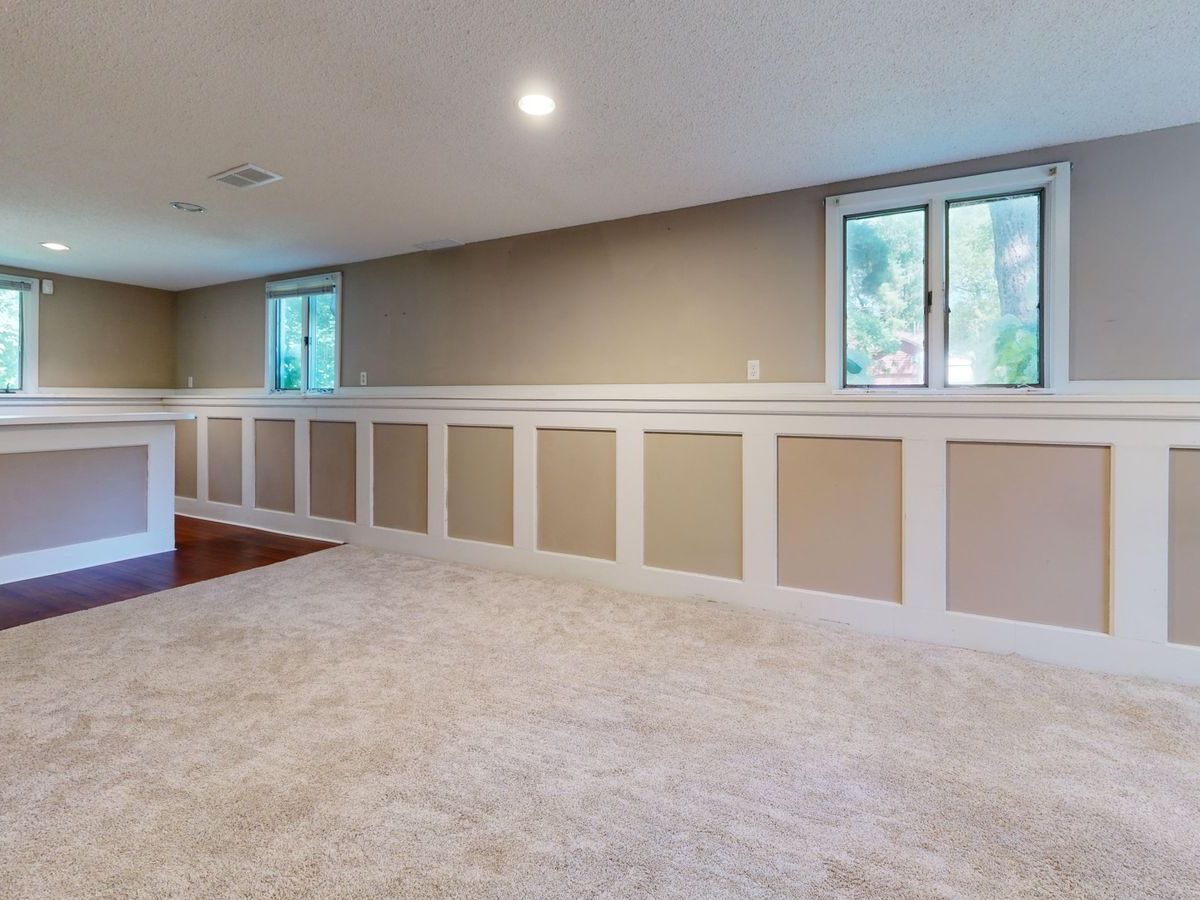
First, look at the slab
Basement floors in older Philadelphia houses vary a great deal. Some are sound concrete. Some are a thin skim over dirt, cracked and sloping to a drain. A few are still brick or earth. What can be laid depends on which you have.
| Slab condition | What it needs first |
|---|---|
| Flat, dry, solid | Nothing; most floors can go straight down |
| Solid but uneven | Self-leveling compound or grinding |
| Damp to the touch or fails a moisture test | A vapor barrier or raised subfloor, and a waterproof floor |
| Thin, crumbling or hollow | Patching, or a new slab in the worst cases |
| Old tiles in place | Testing for asbestos before they are disturbed |
Choosing the surface
- Vinyl plank or tile. Waterproof, forgiving, good-looking. The usual recommendation.
- Porcelain tile. Permanent and waterproof. Cold unless heated; best in bathrooms and at entrances.
- Sealed, stained or epoxy-coated concrete. Loses no headroom at all, which matters in a low basement.
- Carpet tiles. Warm and replaceable one at a time. Only on a dry floor.
- Engineered wood. For dry suburban basements with a proper underlayment.
- Rubber. For a gym.
Avoid solid hardwood and ordinary laminate below grade.
Headroom
Every layer under the floor comes off the ceiling height. Where the room is already close to the limit, choose a thin floor directly on the slab over a raised subfloor.
Planning for water
If the floor drain has ever backed up, choose a surface that can be mopped and dried, keep baseboards in PVC or tile, and store nothing precious at floor level. Leave the drain and any cleanout uncovered.
Stairs and thresholds
A new floor changes the height of the bottom step. A good installer adjusts for it so the last riser is not a trip hazard.
The published national range is $2,000–$12,000. Cure any leak first: see basement waterproofing.
How it works
Fill in the form
Five questions about your basement.
We refer you
We send the details to a contractor who works in your neighborhood or town.
Site visit
They inspect, measure and discuss what you want, then send a written estimate.
Your decision
Go ahead, adjust the plan or walk away. The estimate is free either way.
Basement Flooring FAQs
What is the safest flooring choice?
Waterproof vinyl plank or tile. If water does get in, they can be dried and often re-laid. Carpet and standard laminate usually have to be thrown away.
The old floor has nine-inch tiles. Is that a problem?
Possibly. Small square tiles and the black adhesive under them in mid-century basements sometimes contain asbestos. Do not sand or break them. A contractor can have them tested, and they are often covered over or removed by a licensed firm.
Other services
Basement Remodeling & Renovation
Gutting and rebuilding a basement that was finished a generation ago.
Learn moreBasement Bathroom Addition
Adding a toilet, sink and perhaps a shower below street level, where drainage is the hard part.
Learn moreBasement Bedroom
A sleeping room that satisfies the rules on escape, height, light and alarms.
Learn moreEgress Window Installation
A full-size escape window and well, where the house and the lot allow one.
Learn moreBasement Bars & Wet Bars
A place to pour and serve downstairs, with or without running water.
Learn moreBasement Home Theater
A screening room built for picture and sound, and for keeping the peace with neighbors.
Learn moreBasement Home Gym
Somewhere to train at home, with flooring, air and power matched to your equipment.
Learn moreBasement Home Office
A separate, quiet workspace with good light, power and a wired connection.
Learn moreBasement Kitchenette
Sink, fridge and counter downstairs, for parties or for someone staying.
Learn moreBasement In-Law Suite
Private quarters for a parent or adult child, with sleeping, bathing and a place to make a meal.
Learn moreBasement Ceilings
Finishing the ceiling without losing headroom you cannot spare.
Learn moreBasement Waterproofing
Finding out why a basement gets wet and curing it before anything is built.
Learn moreBasement Framing & Insulation
Building warm, dry walls in front of old stone, brick or block.
Learn moreBasement Playroom
Indoor play space for families without a big yard, built tough and easy to clean.
Learn moreAreas we serve near Philadelphia, PA
Philadelphia Basement Finishing serves Philadelphia, PA and surrounding communities, including Upper Darby, Drexel Hill, Havertown, Ardmore, Bryn Mawr, Springfield, Abington, Conshohocken, Media, Willow Grove, Wayne, Norristown, King of Prussia, Bensalem and Lansdale.